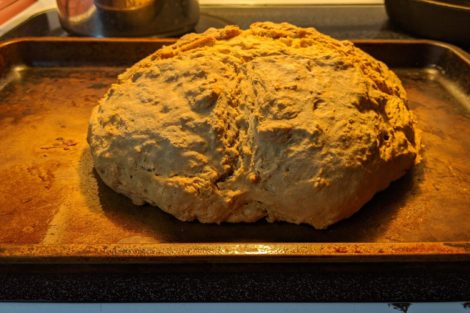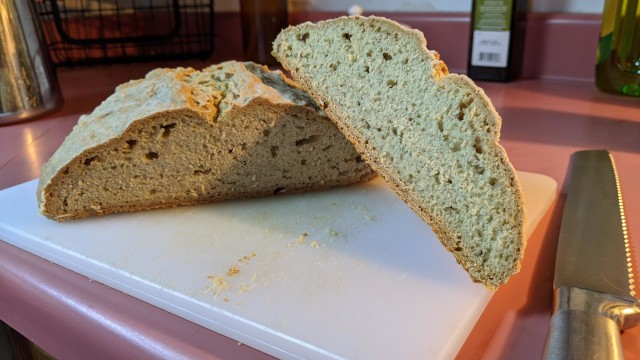
Let’s just go ahead and get this out of the way, bread needs yeast. The fluffy, soft, chewy texture that we love so much can /truly/ only come through some sort of fermentation, which gives us C02 which creates air-pockets in the dough — held together with gluten. Typically, yeast or natural yeast in sourdough, is the driving force behind this. What do you do if you have no store-bought yeast? You haven’t followed the instructions for creating a sourdough starter? Be at ease my friends, there is a solution: Baking Soda. While definitely not a 1:1 replacement for yeast, Baking soda, buttermilk and salt can do magic when their powers combine.
The OG of no yeast breads is Irish Soda Bread. Basically, yeast and gluten building (through kneeding) is replaced with baking soda and buttermilk. Baking soda, sodium bicarbonate (NaHCO3), is a leavening (foam, bubble creator) agent that when used with an acidic component, vinegar in buttermilk, creates C02 gas. Ok, that was a lot, lets break this down.
Flour + Yeast + Water + Salt = dough
Flour + (Baking soda + acid) + Salt = dough
So, the math looks like it works. We can generate bubbles. Do we need to let this dough proof like a yeast dough? No, the difference in the release of CO2 between yeast and Baking soda is quite noticeable. Baking soda is used in quick bake recipes for this very reason. The goal is to mix it in, hit it with heat and get it out of there. Yeast on the other hand can sit for hours, even overnight in the fridge and will continue to release CO2. Yeast, being a living organism, can keep producing if given the proper nutrients, while baking soda is a rapid chemical reaction.
Ok, now that we have the source code out of the way, lets get to baking.

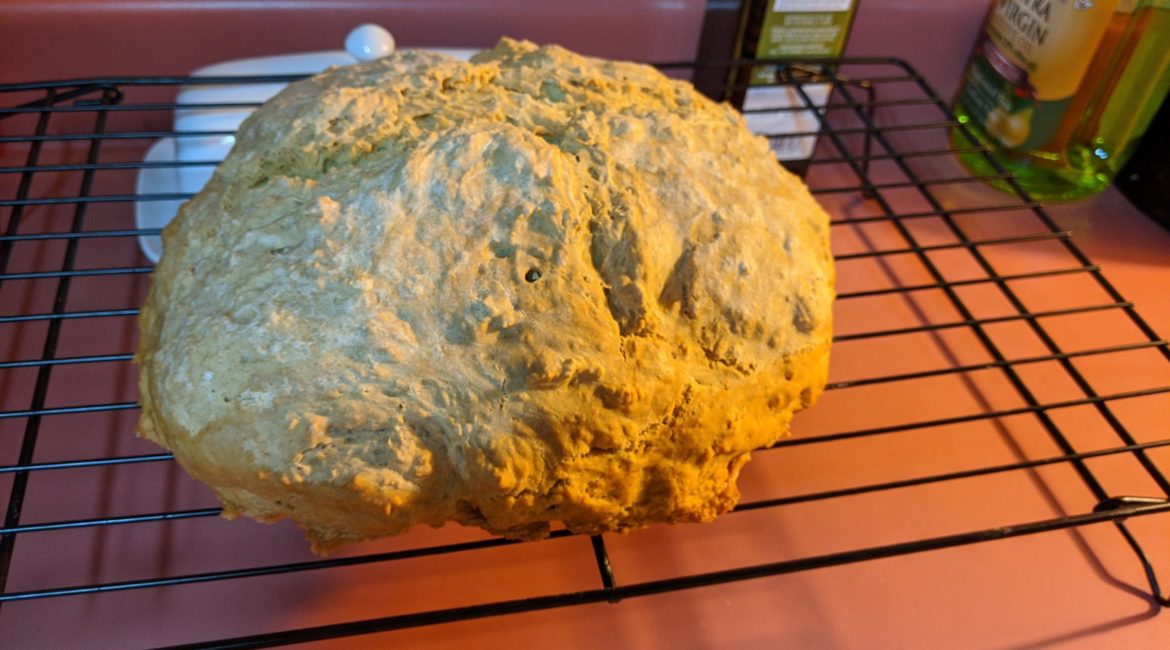



Ingredients
Instructions
- Preheat your oven to 430F/220C, then get your buttermilk ready. If you have real buttermilk, congrats — you’re ready. Otherwise, get 2 cups of milk (soy, almond, coconut etc..) and toss in 1 tbsp of vinegar and let it begin to curdle.
-
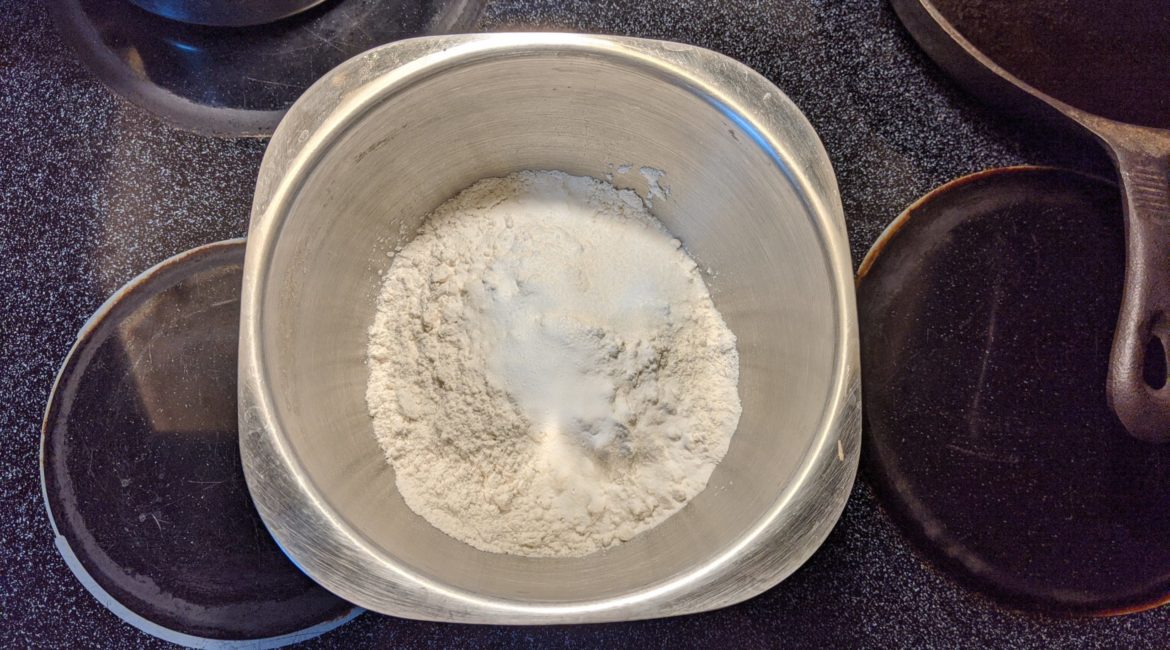
Gather your dry bits (flour, baking soda salt) and, if you can, sift it together. If not, just whisking it thoroughly in the bowl will do.

-
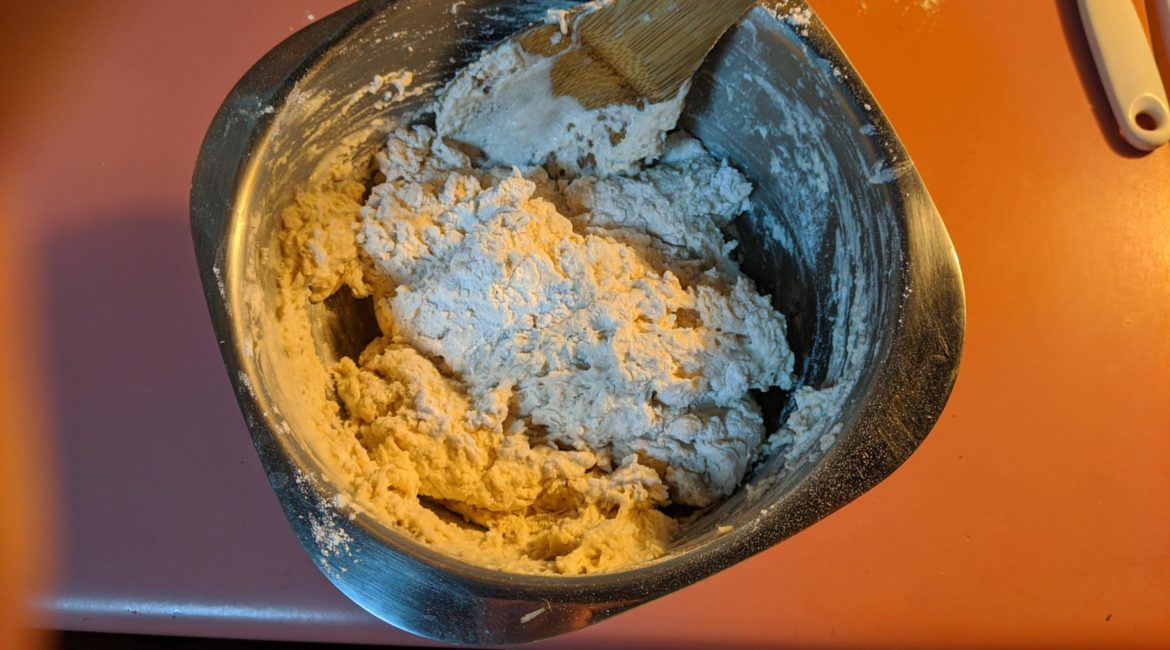
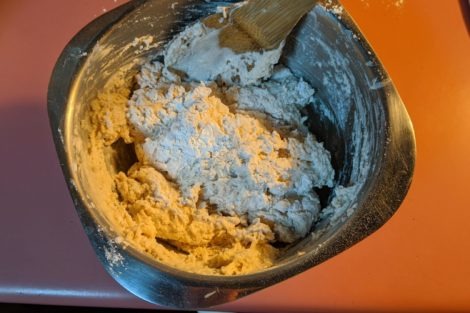
Take your buttermilk and pour it all in. Begin to mix until everything is incorporated.
-
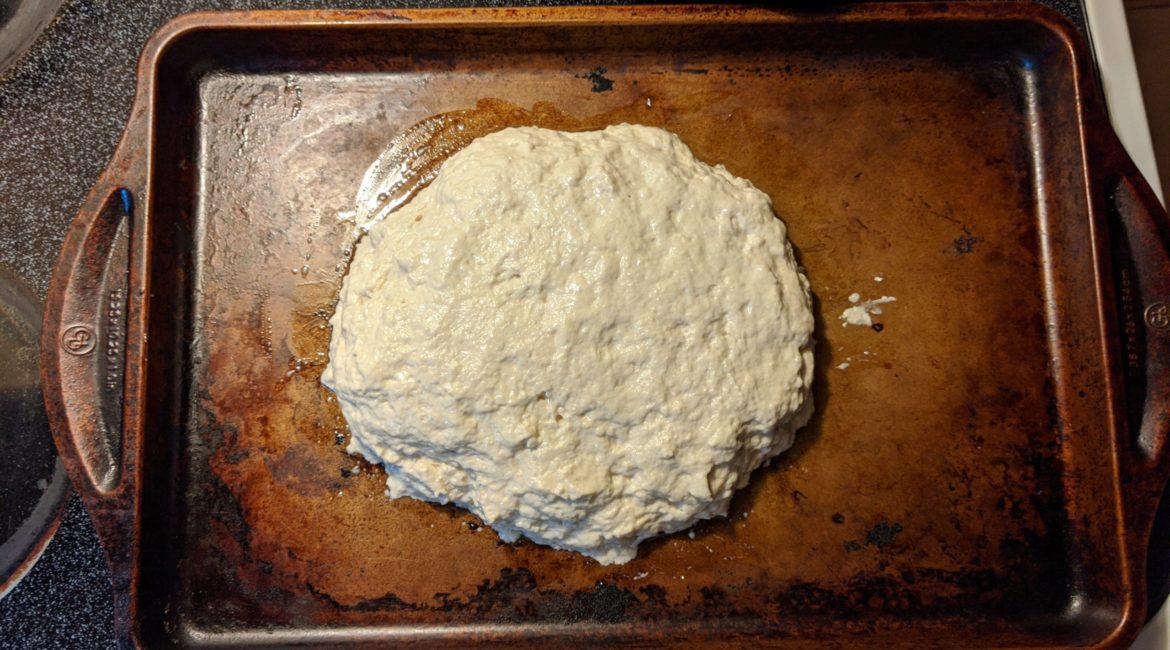
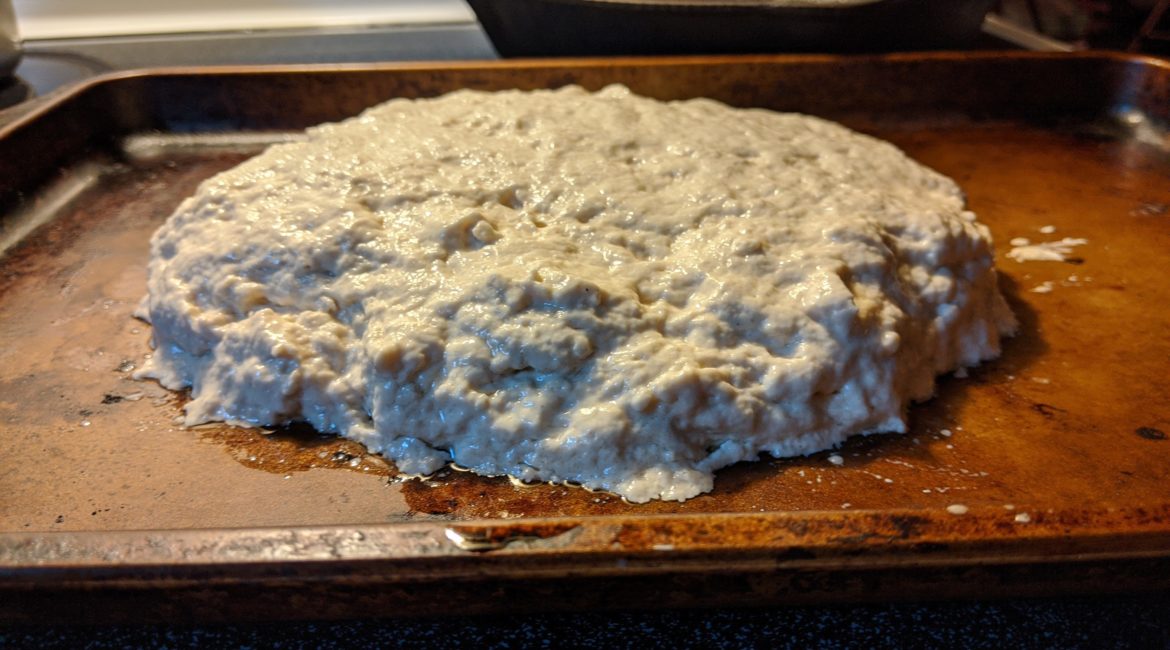
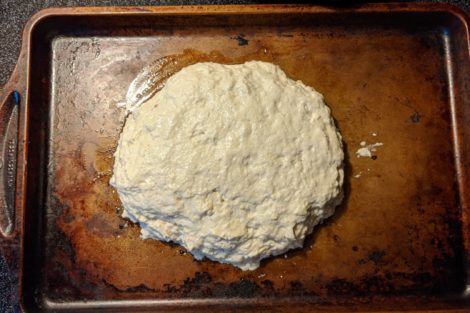
Lightly dust your surface with some flour and pour out your dough. Work the dough some more until it comes together or 8-10 kneeds. You do not want to over-work this dough. Once you have your dough ball, place it on a baking sheet. Use parchment paper or some oil on the sheet to prevent sticking. Shape the dough into a large, 1 inch pancake. If the dough is too tall, it will not raise.
-
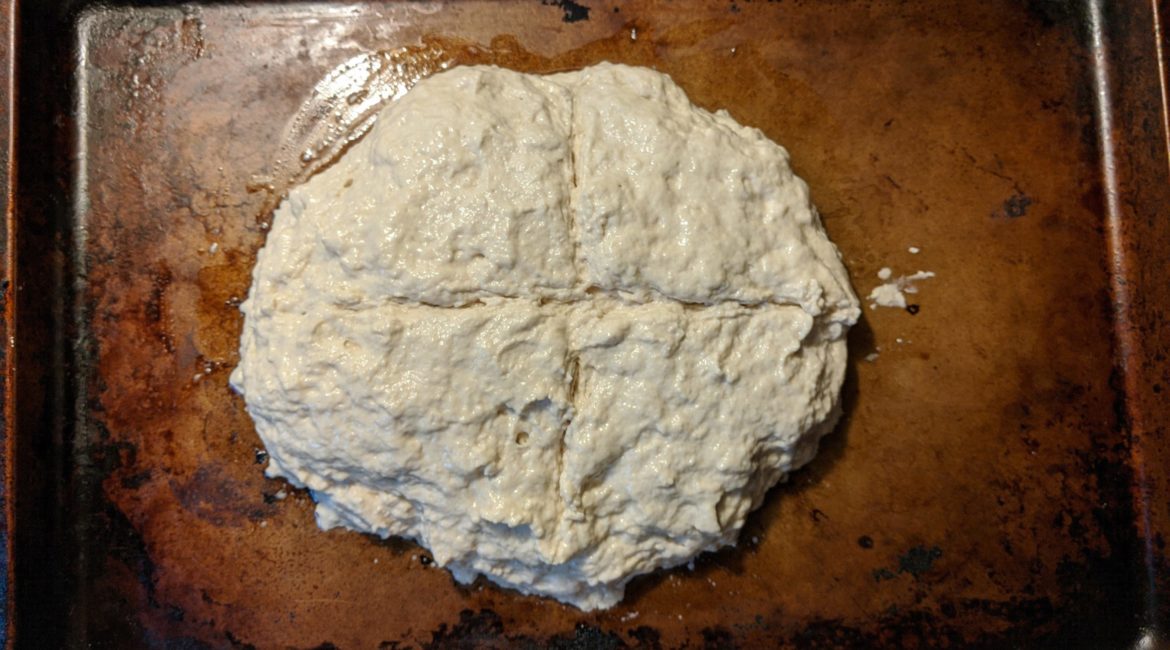
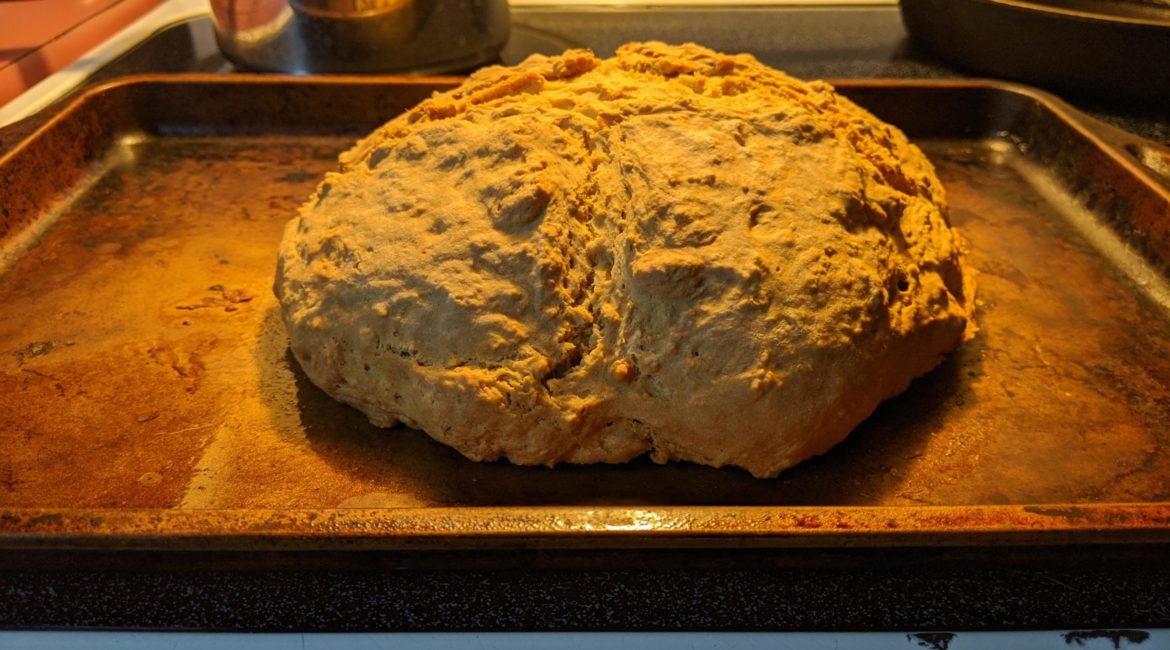
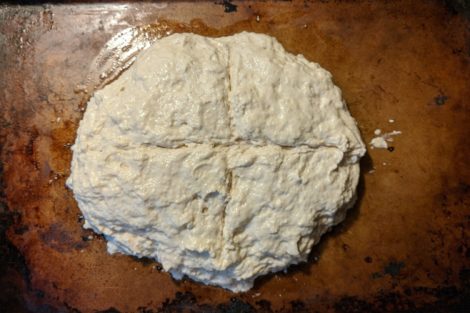
Score a cross on top of the dough Place this in your oven for 20 minutes. Drop the temp to 390F/200C and leave it to bake for another 20 minutes.
-
Once finished place on a wire rack to cool. A finished loaf should sound hollow when thumped with your finger on the bottom.